
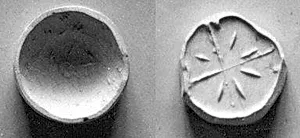
Cupola seal, engraved on back and face
Unknown Artist
ca. 1400–1200 BCE
Medium
Black steatite
Dimensions
Diameter: 1.74 cm Height: 1.16 cm String Hole: 0.3 cm
Classification
Stone-Stamp Seals
Culture & Period
Hittite · Hittite Empire
Department
Ancient Near Eastern Art
Museum
Metropolitan Museum of Art, New York, NY
Credit
Purchase, 1899
Accession Number
99.22.9
Rights
Public Domain
Art Historical Context
This exquisite cupola seal, crafted from glossy black steatite around 1400–1200 BCE, exemplifies the refined artistry of the Hittite Empire in ancient Anatolia (modern-day Turkey). Measuring just 1.74 cm in diameter and .16 cm high, with a 0.3 cm string for suspension, it was likely worn as a personal amulet or used to imprint designs into soft clay for authentication—sealing documents, goods, or magical incantations. The seal's distinctive dome-like (cupola) shape and engravings on both back and face highlight the Hittites' mastery of miniature stone carving, a technique that allowed for intricate motifs despite the object's tiny scale. Hittite stamp seals like this one were essential tools of bureaucracy and ritual in their expansive empire, which rivaled Egypt and Mesopotamia during the Late Bronze Age. Produced during a peak of Hittite power, marked by monumental architecture and diplomatic marriages, such seals bore symbolic imagery—often deities, animals, or hieroglyphs—serving both practical and protective roles. Though the specific engravings here remain unnoted, their dual-sided design underscores the culture's sophisticated approach to portability and symbolism. Acquired by the Metropolitan Museum of Art in 1899, this seal offers a tangible glimpse into Hittite daily life and spirituality, reminding us how even the smallest artifacts encoded a civilization's power and beliefs.