
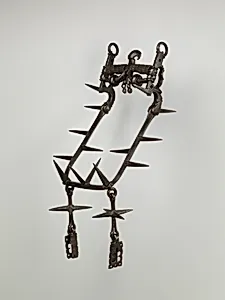
Curb Bit
Unknown Artist
mid-16th century
Medium
Iron alloy
Dimensions
H. 12 1/2 in. (31.8 cm); W. 10 1/4 in. (26 cm); Wt. 3 lb. 6.2 oz. (1536.5 g)
Classification
Equestrian Equipment-Bits
Culture
probably Italian
Department
Arms and Armor
Museum
Metropolitan Museum of Art, New York, NY
Credit
Gift of William H. Riggs, 1913
Accession Number
14.25.1800
Rights
Public Domain
Art Historical Context
This imposing curb bit, crafted from a durable iron alloy in mid-th-century Italy, exemplifies the exquisite metalwork of Renaissance equestrian gear. Measuring 12½ inches high and weighing over 3 pounds, its substantial form was designed for powerful warhorses, reflecting the era's emphasis on mounted combat in Europe's turbulent battlefields. Likely produced in one of Italy's renowned armories, such as those in Milan or Brescia, it entered The Metropolitan Museum of Art's collection as a gift from William H. Riggs in 1913. Curb bits like this one revolutionized horsemanship by applying leverage through a chain or strap under the jaw, allowing riders precise control over speed and direction—crucial for heavily armored knights and condottieri mercenaries. The bit's robust construction, forged to withstand intense pressure, highlights the fusion of functionality and artistry in arms and armor, where even utilitarian objects demanded masterful blacksmithing techniques. Today, this artifact offers a tangible link to the chivalric world of the Renaissance, reminding us how equestrian innovations shaped military history and the cultural ideal of the noble rider. Visitors to the Arms and Armor department can appreciate its heft firsthand, evoking the thunder of hooves on the Italian plains.