
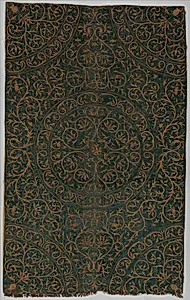
Curtain
Unknown Artist
17th century
Medium
Velvet with gilt thread
Dimensions
L. 102 x W. 62 in. 259.1 x 157.5 cm
Classification
Textiles-Embroidered
Culture
Portuguese
Department
European Sculpture and Decorative Arts
Museum
Metropolitan Museum of Art, New York, NY
Credit
Bequest of Mary Anna Palmer Draper, 1915
Accession Number
15.43.314
Rights
Public Domain
Art Historical Context
This stunning 17th-century Portuguese, crafted from luxurious velvet embroidered with shimmering gilt thread, invites visitors to glimpse the grandeur of Baroque-era interiors. Measuring an impressive 102 by 62 inches (259.1 x 157.5 cm), it would have draped windows or doorways in affluent homes or ecclesiastical settings, filtering light while showcasing wealth and piety. Its classification as an embroidered textile highlights Portugal's mastery in decorative arts during a time of colonial prosperity, when gold and spices from Brazil and Asia fueled opulent craftsmanship. The use of velvet—a plush, pile-woven fabric—and intricate gilt thread embroidery exemplifies advanced textile techniques of the period. Gilt threads, often made from metal-wrapped silk, catch the light to create a radiant, jewel-like effect, symbolizing divine splendor in religious contexts or royal extravagance in secular ones. Such pieces were labor-intensive, requiring skilled artisans to blend practicality with artistry. Bequeathed to the Metropolitan Museum of Art in 1915 by Mary Anna Palmer Draper, this anonymous masterpiece endures as a testament to Portugal's cultural heritage. It reminds us how everyday objects like curtains embodied artistic innovation and historical narratives.