
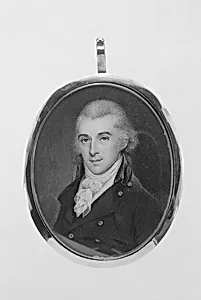
Curtis Clay
James Peale, 1798
About this artwork
James Peale's *Curtis Clay* (1798) is a delicate watercolor miniature on ivory, measuring just 2⅝ × 2¼ inches, exemplifying the intimate portraiture that flourished in early America. As a member of the renowned Peale family of artists—brother to Charles Willson Peale—James specialized in these petite likenesses, often created as cherished personal mementos for lockets, brooches, or family keepsakes. This portrait captures the sitter, Curtis Clay, with precise detail, highlighting Peale's skill in rendering subtle facial expressions and textures on the smooth, luminous ivory surface. Painted during the Federal period shortly after the American Revolution, the work reflects a young nation's growing emphasis on individual identity and refinement. Miniatures like this were highly prized for their portability and affordability compared to large oil portraits, making portraiture accessible to the emerging middle class. Watercolor on ivory allowed for translucent layers of color that mimicked the glow of skin and fabric, a technique Peale mastered through years of practice. Housed in The Metropolitan Museum of Art's American Wing, *Curtis Clay* offers a window into 18th-century American life, showcasing the cultural importance of such heirlooms in preserving personal and familial legacies. Its acquisition through the Lila Acheson Wallace Gift in 2006 underscores its enduring value in American art history.