
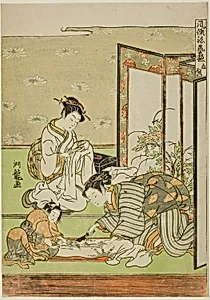
Cutting and Sewing (Tachinui), from the series "Collection of of Fashionable Accomplishments (Furyu shogei zukushi)"
c. 1770/72
Medium
Color woodblock print; chuban
Dimensions
22.6 × 15.9 cm (8 7/8 × 6 1/4 in.)
Classification
woodblock print
Department
Arts of Asia
Museum
Art Institute of Chicago
Accession Number
21299
Rights
Public Domain
Art Historical Context
In the vibrant world of 18th-century Japan, Isoda Koryusai's *Cutting and Sewing (Tachin)* from the series *Collection of Fashionableishments (Furyu shogei zukushi)* captures the elegance of everyday refinement. Created around 1770–72 during the Edo period, this color woodblock print showcases Koryusai's mastery of ukiyo-e, the "pictures of the floating world genre that celebrated beauty, fashion, and urban life in Edo (modern Tokyo). The chuban format—compact at 22.6 × 15.9 cm—made it an accessible luxury for the growing merchant class. The artwork depicts a graceful woman engaged in tachinui, the art of cutting and sewing fabric, one of the "fashionable accomplishments" prized by refined ladies. Koryusai, a leading printmaker influenced by pioneers like Suzuki Harunobu, employed nishiki-e techniques: intricate woodblocks carved for each vibrant hue, from soft kimono pinks to subtle cloth textures. This series highlights women's cultural roles, blending domesticity with artistry in a time when such skills symbolized sophistication amid Japan's isolated prosperity. Housed in the Art Institute of Chicago's Arts of Asia collection, this print offers a window into ukiyo-e's golden age, where everyday acts became poetic emblems of fleeting beauty. A delightful glimpse of historical haute couture!