
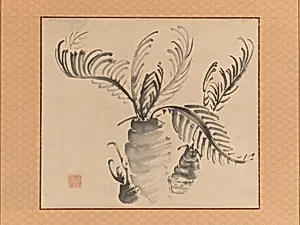
池大雅筆 蘇鉄図|Cycad
mid-18th century
Medium
Hanging scroll; ink on paper
Dimensions
Image: 11 in. × 12 5/8 in. (28 × 32.1 cm) Overall with mounting: 41 9/16 × 18 1/16 in. (105.5 × 45.8 cm) Overall with knobs: 41 9/16 × 19 15/16 in. (105.5 × 50.7 cm)
Classification
Paintings
Culture & Period
Japan · Edo period (1615–1868)
Department
Asian Art
Museum
Metropolitan Museum of Art, New York, NY
Credit
Mary Griggs Burke Collection, Gift of the Mary and Jackson Burke Foundation, 2015
Accession Number
2015.300.168
Rights
Public Domain
Tags
Art Historical Context
Ike Taiga's *Cycad* (蘇鉄図), a mid-18th-century scroll in ink on paper captures the rugged elegance of the ancient cycad plant symbol of resilience and longevity in East Asian culture. Rendered with Taiga's signature bold, expressive brushstrokes, the painting exemplifies the Nanga (Southern School), a literati movement popular during Japan's Edo period (1615–1868). This approach drew inspiration from Chinese scholar-artists, emphasizing personal expression over rigid realism, and allowed Taiga to evoke the plant's textured fronds and sturdy trunk through dynamic ink washes and minimalist composition. Hanging scrolls like this were prized possessions in Edo-era homes and tea houses, unrolled for contemplation during gatherings or seasonal displays. Taiga (1723–1776), one of Japan's most innovative painters, blended Zen-inspired simplicity with playful vitality, making his works accessible yet profound. The compact image size (11 × 12⅝ in.) highlights the intimacy of the format, inviting viewers to appreciate subtle nuances in ink density and negative space. From the Mary Griggs Burke Collection at the Metropolitan Museum of Art, this piece reflects the enduring fascination with nature in Japanese art, where plants often embodied philosophical ideals. Its stark beauty reminds us of Taiga's genius in transforming everyday flora into timeless poetry.