
Cycling suit
1896
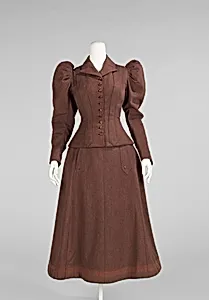
Medium
wool, silk, leather
Classification
Cycling suit
Culture
American
Department
Costume Institute
Museum
Metropolitan Museum of Art, New York, NY
Credit
Brooklyn Museum Costume Collection at The Metropolitan Museum of Art, Gift of the Brooklyn Museum, 2009; In memory of Mrs. Arthur Rideway Ryan (née Katherine Browne) from her children, Katherine B. Ryan, and Marcella Burnell and Arthur Martin Ryan, 1983
Accession Number
2009.300.547a, b
Rights
Public Domain
Art Historical Context
In the late 19th century, the bicycle boom swept through America, revolutionizing transportation and social norms—especially for women. This *Cycling suit* by Trouville, crafted in 1896, the era's "rational" movement, designed for and mobility. No longer confined by cors and floor-length skirts, women embraced tailored suits like this one, featuring divided skirts or bloomers that allowed safe pedaling on the newly popular safety bicycles. Produced during a time when cycling symbolized newfound independence, health benefits, and even hints of suffrage activism, the suit reflects American culture's embrace of leisure sports and progressive fashion. Made from wool, silk, and leather, the garment combines durability with elegance: wool for warmth and resilience during outdoor rides, silk for a touch of luxury, and leather for sturdy accents like trims or fastenings. Trouville, likely a specialist in sportswear, tailored this piece for the Costume Institute at The Metropolitan Museum of Art, where it stands as a testament to fashion's evolution. Donated in memory of Katherine Browne Ryan, it highlights how everyday attire became a canvas for cultural change, inviting visitors to pedal through history.