
Cylinder seal
Unknown Artist
ca. 15th century BCE
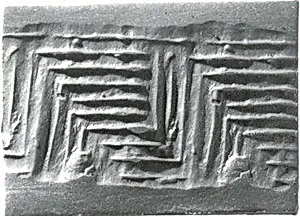
Medium
Steatite (?)
Dimensions
1.06 in. (2.69 cm)
Classification
Stone-Cylinder Seals
Culture & Period
Mitanni · Mitanni
Department
Ancient Near Eastern Art
Museum
Metropolitan Museum of Art, New York, NY
Credit
Rogers Fund, 1956
Accession Number
56.81.13
Rights
Public Domain
Art Historical Context
This exquisite cylinder seal, crafted around the 15th century BCE during the Mitanni period,ails from the vibrant culture of the Mitanni kingdom in northern Mesopotamia and Syria. Measuring just 1.06 (2.69 cm), this small steatite (?) object exemplifies the ingenuity of Ancient Near Eastern artisans. Mitanni, a Hurrian-speaking power influential from about 1500–1300 BCE, blended Mesopotamian, Egyptian, and Indo-Aryan elements, producing seals that served as both practical tools and symbols of authority. Cylinder seals like this one were rolled across wet clay to leave intricate impressions, sealing documents, goods, or doors against tampering. Carved in intaglio—a technique where designs are incised into the stone—these seals often featured gods, rulers, or mythical scenes, reflecting Mitanni religious devotion and social hierarchy. Though the exact imagery on this seal remains unnoted, its survival speaks to the era's advanced lapidary skills and the seals' role in diplomacy and trade. Acquired through the Rogers Fund in 1956, this artifact at the Metropolitan Museum of Art offers a tangible link to a sophisticated Bronze Age society, where such tiny masterpieces authenticated the powerful and preserved history in clay.