
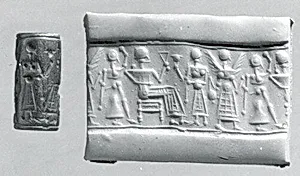
Cylinder seal
Unknown Artist
ca. 15th–13th century BCE
Medium
Steatite
Dimensions
0.87 in. (2.21 cm)
Classification
Stone-Cylinder Seals
Culture & Period
Cypriot · Late Cypriot
Department
Ancient Near Eastern Art
Museum
Metropolitan Museum of Art, New York, NY
Credit
Gift of Frederic Newlin Price, 1959
Accession Number
59.209.39
Rights
Public Domain
Tags
Art Historical Context
This petite cylinder seal, crafted from steatite around the 15th–13th century during Cyprus's Late Cypriot period, exemplifies the island's vibrant Bronze Age artistry. Measuring just 0.87 (2.21 cm), it belongs to a tradition of seals imported and adapted from Mesopotamian influences, yet distinctly Cypriot in style. Rolled across soft clay, these seals created repeated impressions serving as personal signatures, administrative markers, or protective amulets—essential for trade, governance, and ritual in a seafaring culture renowned for copper exports. Carved with human figures—a common motif on such seals—the intricate reliefs likely depict deities, worshippers, or daily scenes, reflecting Cyprus's crossroads position between the Aegean, Levant, and Anatolia. Steatite's soft, soapstone-like quality allowed skilled artisans to achieve fine details with simple tools, blending local innovation with Near Eastern iconography. Housed in the Metropolitan Museum of Art's Ancient Near Eastern Art department (gift of Frederic Newlin Price, 1959), this seal offers a tangible glimpse into Late Cypriot society, where such objects symbolized identity and power amid burgeoning international commerce. A tiny artifact with timeless intrigue!