
Cylinder seal
Unknown Artist
ca. early 2nd millennium BCE
Medium
Hematite
Dimensions
H. 7/8 in. (2.3 cm); Diam. 3/8 in. (1 cm)
Classification
Stone-Cylinder Seals-Inscribed
Culture & Period
Babylonian · Old Babylonian
Department
Ancient Near Eastern Art
Museum
Metropolitan Museum of Art, New York, NY
Credit
Gift of Nanette B. Kelekian, in memory of Charles Dikran and Beatrice Kelekian, 1999
Accession Number
1999.325.38
Rights
Public Domain
Tags
Art Historical Context
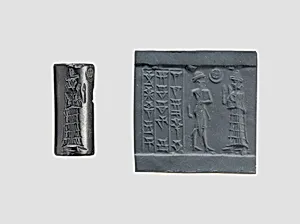
This exquisite hematite cylinder seal, dating to the early 2nd millennium BCE during the Old Babylonian period, offers a window into the bustling administrative world of ancient Mesopotamia. Crafted by an unknown Babylonian artist, these small stone cylinders—measuring just 7/8 inch high and 3/8 inch in diameter—were rolled across wet clay to create impressions, serving as personalized seals for documents, goods, and transactions. Much like a modern signature, they authenticated ownership and authority in a society reliant on cuneiform record-keeping. Carved with remarkable precision from hematite, a dense and durable iron ore prized for its hardness and lustrous polish, this inscribed seal features human figures, likely depicting scenes of daily life, ritual, or divine interaction common in Babylonian art. The intricate engraving technique highlights the artisan's skill, as fine details would transfer crisply when impressed, blending functionality with artistry. Housed in the Metropolitan Museum of Art's Department of Ancient Near Eastern Art (gift of Nanette B. Kelekian, 1999), this artifact illuminates the sophisticated bureaucracy and cultural reverence for symbolism in Old Babylonian society, reminding us how everyday tools preserved history for millennia.