
Cylinder seal
Unknown Artist
ca. 15th–13th century BCE
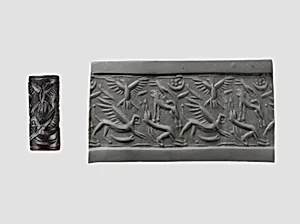
Medium
Hematite
Dimensions
H. 13/16 in. (2.1 cm); Diam. 3/8 in. (0.9 cm)
Classification
Stone-Cylinder Seals
Culture & Period
Mitanni · Mitanni
Department
Ancient Near Eastern Art
Museum
Metropolitan Museum of Art, New York, NY
Credit
Gift of Nanette B. Kelekian, in memory of Charles Dikran and Beatrice Kelekian, 1999
Accession Number
1999.325.184
Rights
Public Domain
Art Historical Context
This petite hematite cylinder seal, just 13/16 inch (2.1 cm) in height and 3/8 inch (0.9 cm) in diameter, offers a window into the sophisticated world of the Mitanni around 1500–1200 BCE. Flourishing in northern Mesopotamia and Syria, Mitanni was a Hurrian-speaking power known for its chariotry, diplomacy with Egypt and Hittites, and vibrant artistic traditions blending Mesopotamian influences with local flair. As a classic stone-cylinder seal from the Ancient Near world, it exemplifies tools vital to daily administration and elite identity. Carved in intaglio—a technique where designs are incised into the hard, lustrous surface of hematite—the seal was rolled across wet clay to create a continuous raised impression, serving as a signature for documents, goods, or jars. Hematite's density allowed for fine, durable engravings, often featuring mythical scenes, deities, or heraldic motifs, though the precise imagery here remains a tantalizing mystery. These seals were more than bureaucratic stamps; they carried protective, magical connotations, linking owner to divine favor. Today, this gift to the Metropolitan Museum of Art in 1999 invites us to marvel at Mitanni's enduring legacy. Imagine the ancient scribe pressing it into clay— a simple act echoing the complexities of Bronze Age society. A true gem of precision and portability!