
Cylinder seal
Unknown Artist
ca. 2350–2150 BCE
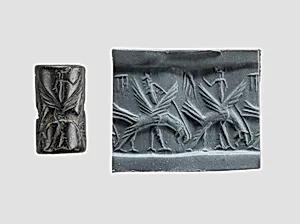
Medium
Serpentine, black
Dimensions
H. 1.9 cm x Diam. !.1 cm
Classification
Stone-Cylinder Seals
Culture & Period
Akkadian · Akkadian
Department
Ancient Near Eastern Art
Museum
Metropolitan Museum of Art, New York, NY
Credit
Museum Accession
Accession Number
X.304.30
Rights
Public Domain
Art Historical Context
Step into the world of ancient Mesopotamia with this exquisite Akkadian cylinder seal, crafted around 2350–2150 BCE from glossy black serpentine stone. Measuring just 1.9 cm high and 1.1 cm in diameter, this petite gem exemplifies the precision of Akkadian artisans. Cylinder seals like this one were revolutionary tools—rolled across soft clay to create a continuous impression, serving as signatures on administrative tablets, contracts, and goods They marked the dawn of bureaucratic sophistication in one of the world's first empires, under rulers like Sargon of Akkad. Akkadian art marked a shift toward naturalism and dynamism, departing from earlier stylized Sumerian forms. Carved in intaglio (incised lines), this seal likely features intricate scenes of deities, heroes, or mythical combats—hallmarks of the period's heroic iconography—rendered with remarkable detail despite its tiny scale. Serpentine's hardness demanded expert lapidary skills, highlighting the technological prowess of Near Eastern stone carvers. Housed in the Metropolitan Museum of Art's Ancient Near Eastern collection, this seal offers a tangible link to Akkad's imperial glory, a time when art fused religion, power, and daily life. Imagine it sealing a royal decree— a whisper from 4,000 years ago!