
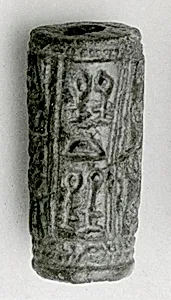
Cylinder seal
Unknown Artist
ca. 1640–1550 B.C.
Medium
Green glazed steatite
Dimensions
L. 2.3 cm (7/8 in.)
Classification
Cylinder seal
Period
Second Intermediate Period
Department
Egyptian Art
Museum
Metropolitan Museum of Art, New York, NY
Credit
Purchase, Edward S. Harkness Gift, 1926
Accession Number
26.7.25
Rights
Public Domain
Art Historical Context
This exquisite cylinder seal, crafted from green glazed steatite around 1640–1550 B.C., hails from Egypt's Second Intermediate Period (asties 13–17). This era was marked by political fragmentation, with native Egyptian rulers in the south clashing against Hyksos invaders from the East in the north. The seal's small size— just 2.3 cm long—belies its practical power: rolled across soft clay, it imprinted intricate designs to authenticate documents, goods, or tombs, serving as a ancient signature of authority. The choice of steatite, a soft soapstone easily carved into fine details, then glazed in vibrant green—a color symbolizing fertility and rebirth in Egyptian culture—highlights advanced artisanal techniques. Glazing not only protected the stone but added a lustrous sheen, making the seal both functional and visually striking. Cylinder seals like this one reflect Hyksos cultural influences, bridging Mesopotamian traditions with Egyptian scarab practices during a time of flux. Today, housed in the Metropolitan Museum of Art's Egyptian Art department (purchased via the Edward S. Harkness Gift in 1926), it offers a window into daily administration and the blend of cultures that shaped Egypt's resilience. Imagine the roll of a royal wrist leaving its eternal mark!