
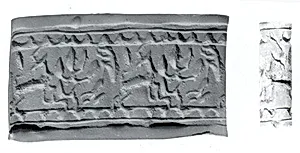
Cylinder seal and modern impression: horned animal and tree
Unknown Artist
ca. 13th century BCE
Medium
Faience
Dimensions
1.73 in. (4.39 cm)
Classification
Faience-Cylinder Seals
Culture & Period
Elamite · Middle Elamite
Department
Ancient Near Eastern Art
Museum
Metropolitan Museum of Art, New York, NY
Credit
Bequest of Lester Wolfe, 1983
Accession Number
1984.175.23
Rights
Public Domain
Art Historical Context
This exquisite cylinder seal, crafted around the 13th century BCE during the Middle Elamite, hails from ancient Elam—a sophisticated civilization in what is now southwestern Iran. Made of faience, a vibrant glazed ceramic composite prized for its brilliant turquoise hue and durability, the seal measures just 1.73 inches tall. Its carved imagery depicts a horned animal beside a tree, motifs that likely held symbolic meaning in Elamite cosmology, perhaps evoking fertility, protection, or sacred natural forces. Cylinder seals like this one were revolutionary administrative tools in the Ancient Near East. Rolled across wet clay, they left precise impressions to authenticate documents, goods, or royal decrees, blending artistry with bureaucracy. Faience's glassy glaze not only enhanced the seal's visual appeal but also resisted wear, ensuring its impressions remained crisp over millennia. This example, from the Metropolitan Museum of Art's Ancient Near Eastern collection, reflects Elamite mastery in miniature sculpture. Though the artist remains unknown, the seal's intricate detailing showcases the period's technical prowess and cultural reverence for stylized nature. Bequeathed by Lester Wolfe in 1983, it offers visitors a tangible glimpse into Elamite daily life and spirituality, where art sealed the bonds of society itself.