
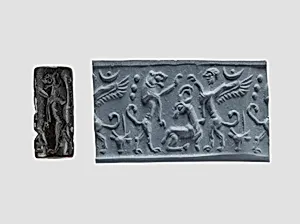
Cylinder seal and modern impression: lion and sphinx over an antelope
Unknown Artist
ca. 14th century BCE
Medium
Black-grey steatite
Dimensions
0.83 in. (2.11 cm)
Classification
Stone-Cylinder Seals
Culture & Period
Cypriot · Late Cypriot II
Department
Ancient Near Eastern Art
Museum
Metropolitan Museum of Art, New York, NY
Credit
The Cesnola Collection, Purchased by subscription, 1874–76
Accession Number
74.51.4313
Rights
Public Domain
Tags
Art Historical Context
This exquisite cylinder seal, carved from black-grey steatite and measuring just 0. inches tall, hails from Cyprus during the Late Cypriot II around the 14th century BCE. Rolled across soft clay, it leaves a vivid impression of a dynamic scene: a powerful lion and a mythical sphinx dominating an antelope. Crafted with fine incision techniques typical of the era, the seal's compact design allowed for repeated use, blending practicality with artistry in a portable emblem of authority. Cylinder seals like this one were essential tools in the ancient Near East and Mediterranean world, imprinting ownership on documents, storage jars, and trade goods amid bustling Bronze Age commerce. From Cypriot culture—part of the vibrant Late Cypriot II era—this piece reflects strong influences from Mesopotamian and Levantine traditions, evident in the iconic motifs. Lions symbolized raw strength and kingship, while the sphinx, with its human-headed lion body, evoked guardianship and enigma, possibly warding off evil or asserting control over the natural world. Acquired as part of The Cesnola Collection at The Metropolitan Museum of Art, this unassuming artifact offers a window into Cyprus's role as a cultural crossroads, where Eastern myths met island ingenuity. Imagine ancient merchants pressing it into clay, sealing deals that spanned empires!