
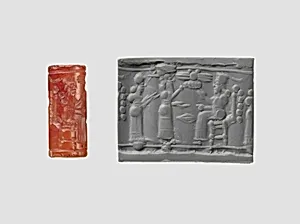
Cylinder seal with cultic scene
Unknown Artist
late 8th–7th century BCE
Medium
Flawed Carnelian (Quartz)
Dimensions
H. 13/16 in. (2 cm); Diam. 3/8 in. (.9 cm)
Classification
Stone-Cylinder Seals
Culture & Period
Assyrian · Neo-Assyrian
Department
Ancient Near Eastern Art
Museum
Metropolitan Museum of Art, New York, NY
Credit
Gift of Nanette B. Kelekian, in memory of Charles Dikran and Beatrice Kelekian, 1999
Accession Number
1999.325.82
Rights
Public Domain
Tags
Art Historical Context
This exquisite cylinder seal, crafted in the Neo-Assyrian period ( 8th–7th century BCE), exemplifies the artistry of ancient Mesopotamia. Measuring just 13/16 inch high and 3/8 inch in diameter, these tiny stone cylinders were rolled across wet clay to create repeated impressions, serving as personal signatures on documents, goods, or tablets. Belonging to Assyrian culture at the peak of its imperial power, this seal features a cultic scene with human figures, offering a glimpse into religious rituals and divine worship central to daily life and governance. Carved in flawed carnelian—a vibrant red variety of quartz prized for its durability and symbolic associations with blood and vitality—the seal showcases masterful intaglio engraving techniques. Artisans meticulously incised intricate details into the hard stone, capturing dynamic compositions that conveyed status, protection, or devotion when impressed. Despite its imperfections, the material's translucency enhanced its prestige, making it a coveted item among elites. Housed in the Metropolitan Museum of Art's Ancient Near Eastern Art department, this gift from Nanette B. Kelekian honors a legacy of collecting. Such seals are invaluable windows into Assyrian society, blending artistry, bureaucracy, and spirituality in a remarkably compact form.