
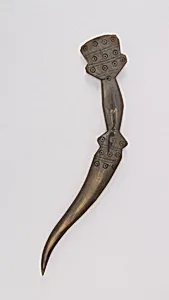
Dagger
Unknown Artist
18th–19th century
Medium
Horn (buffalo)
Dimensions
H. 10 1/2 in. (26.7 cm); W. 2 1/8 in. (5.4 cm); Wt. 2.6 oz. (73.7 g)
Classification
Daggers
Culture
Indian, Bhil
Department
Arms and Armor
Museum
Metropolitan Museum of Art, New York, NY
Credit
Bequest of George C. Stone, 1935
Accession Number
36.25.930
Rights
Public Domain
Art Historical Context
This elegant dagger, crafted from buffalo horn by an unknown Bhil artist in 18th–19th India, exemplifies the ingenuity of tribal craftsmanship in the subcontinent's Arms and Armor tradition. Measuring just 10½ inches long and weighing a mere 2.6 ounces, its lightweight form—slender at 2⅛ inches wide—suggests was designed for agility, perhaps for close combat, hunting, or ceremonial use among the Bhil people, an indigenous group from western India known for their warrior heritage and resourcefulness with natural materials. Buffalo horn, prized for its durability and workability, was carved and shaped into a functional blade and hilt, showcasing skilled artisanal techniques without reliance on metal. This choice reflects the Bhil's deep connection to their environment, where animal byproducts were transformed into tools of survival and status. Far from mere utility, such daggers often carried cultural symbolism, embodying tribal identity and resilience during a period of colonial transitions. Now housed in The Metropolitan Museum of Art's Arms and Armor Department, thanks to the 1935 bequest of collector George C. Stone, this piece invites us to appreciate the artistry in everyday objects of the past. A testament to sustainable innovation, it bridges utility and beauty in Bhil material culture.