
Dagger
Unknown Artist
18th century
Medium
Steel, nephrite, gold, ruby
Dimensions
L. 14 in. (35.6 cm); L. of blade 9 1/4 in. (23.5 cm); W. 2 1/8 in. (5.4 cm); D. 1 1/16 in. (2.7 cm); Wt. 9.4 oz. (266.5 g)
Classification
Daggers
Culture
Indian, Mughal
Department
Arms and Armor
Museum
Metropolitan Museum of Art, New York, NY
Credit
Bequest of George C. Stone, 1935
Accession Number
36.25.651
Rights
Public Domain
Tags
Art Historical Context
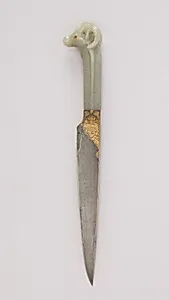
This exquisite 18th-century Mughal from India exemplifies the opulent fusion of functionality and artistry in the imperial workshops of the Mughal Empire.ed from a sharp steel blade measuring 9¼ inches, it features a nephrite (jade) hilt adorned with gold inlays and vibrant rubies, suggesting ram motifs—a tag hinting at symbolic ram heads that evoke strength and virility, common in Islamic and South Asian iconography. At 14 inches overall and weighing just 9.4 ounces, its design balanced lethal precision with wearable elegance for elite warriors or courtiers. In the lavish courts of Mughal emperors like Shah Jahan or Aurangzeb, such daggers were more than weapons; they were status symbols showcasing the empire's mastery of metallurgy and lapidary arts. Nephrite, prized for its toughness and lustrous green hue, was often sourced from Central Asia, while gold damascening and gem-setting techniques highlighted the patronage of skilled artisans in Lahore or Delhi. This piece, now in the Metropolitan Museum of Art's Arms and Armor Department thanks to the 1935 bequest of George C. Stone, reflects the cultural prestige of Mughal arms, blending Persian influences with Indian craftsmanship during a golden age of empire. Visitors will appreciate how this dagger captures the drama of Mughal history—where beauty concealed deadly intent—inviting us to ponder the lives of those who wielded it.