
Dagger
Unknown Artist
18th–19th century
Medium
Steel, jade, gold, diamond, emerald, ruby, agate
Dimensions
H. 15 13/16 in. (40.2 cm); H. of blade 10 7/8 in. (27.6 cm); W. 2 3/4 in. (7 cm); D. 15/16 in. (2.4 cm); Wt. 14.2 oz. (402.6 g)
Classification
Daggers
Culture
Indian, Mughal
Department
Arms and Armor
Museum
Metropolitan Museum of Art, New York, NY
Credit
Bequest of George C. Stone, 1935
Accession Number
36.25.664
Rights
Public Domain
Tags
Art Historical Context
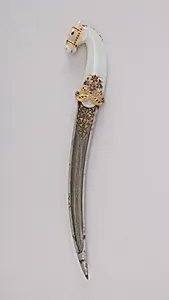
This exquisite Mughal dagger from 18th–19th India exemplifies the opulent fusion of functionality and artistry in imperial arms. Crafted from a sharp steel blade measuring nearly 11 inches, it features a lavish hilt of jade inlaid with gold and encrusted with diamonds, emeralds rubies, and ag. At over 15 inches tall and weighing 14 ounces, its balanced proportions made it both a formidable weapon and a status symbol for nobility, likely used in ceremonial contexts rather than battle. In the waning years of the Mughal Empire, such daggers—often called *khanjar* or *katar*—reflected Persian-influenced Islamic aesthetics blended with Indian craftsmanship. Artisans employed masterful techniques like *koftgari* (gold damascening) and gemstone setting on translucent jade, creating shimmering contrasts that symbolized wealth and power. The decorative motifs, including horses (evident in the intricate carvings), evoked the equestrian prowess of Mughal rulers, who prized such arms as diplomatic gifts or heirlooms. Bequeathed to the Metropolitan Museum of Art in 1935 by George C. Stone, this piece from the Arms and Armor department invites visitors to marvel at how Mughal jewelers transformed steel and stone into wearable treasure, bridging warfare and wonder.