
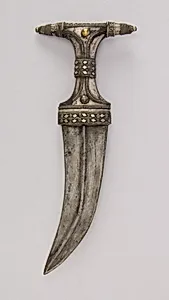
Dagger (Jambiya)
Unknown Artist
18th century
Medium
Steel, wood, silver, copper, brass
Dimensions
H. 11 7/8 in. (30.2 cm); H. of blade 7 3/8 in. (18.7 cm); W. 4 3/4 in. (12.1 cm); Wt. 9.2 oz. (260.8 g)
Classification
Daggers
Culture
Arabian
Department
Arms and Armor
Museum
Metropolitan Museum of Art, New York, NY
Credit
Bequest of George C. Stone, 1935
Accession Number
36.25.765
Rights
Public Domain
Art Historical Context
This exquisite 18th-century Jambiya dagger exemplifies the artistry and craftsmanship of Arabian arms from the Arabian Peninsula, likely Yemen or surrounding regions. Measuring just under 12 inches in height with a 7⅜-inch steel blade, it features the distinctive curved blade and upward-sweeping handle typical of the Jambiya, a short sword-dagger worn tucked into a belt sash. Far more than a weapon, it served as a of manhood, social status, and tribal identity for Yemeni men, often displayed prominently during gatherings or ceremonies. Crafted from steel for the sharp, resilient blade, the hilt and fittings incorporate wood, silver, copper, and brass, showcasing intricate metalworking techniques like chasing, embossing, and inlay. These decorative elements—polished to a gleam—highlight the fusion of functionality and opulence, where everyday warriors and elites alike commissioned personalized pieces to reflect wealth and heritage. The dagger's modest 9.2-ounce weight made it ideal for close combat or self-defense in a turbulent era of tribal conflicts and trade routes. Acquired through the 1935 bequest of collector George C. Stone and now housed in the Metropolitan Museum of Art's Arms and Armor Department, this Jambiya offers a window into Arabian material culture, blending lethal precision with aesthetic splendor. Visitors can appreciate how such objects bridged utility and prestige in pre-modern Islamic societies.