
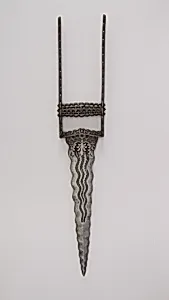
Dagger (Katar)
Unknown Artist
18th–19th century
Medium
Steel
Dimensions
H. 21 1/16 in. (53.5 cm); W. 3 3/4 in. (9.5 cm); Wt. 1 lb. 7.2 oz. (657.7 g)
Classification
Daggers
Culture
Indian
Department
Arms and Armor
Museum
Metropolitan Museum of Art, New York, NY
Credit
Bequest of George C. Stone, 1935
Accession Number
36.25.753
Rights
Public Domain
Art Historical Context
This elegant steel katar, or push dagger, hails from India during the 18th19th century, a period when regional kingdoms and the Mughal Empire fostered a rich tradition of arms-making. Measuring 21 inches long and weighing over a pound, its robust form exemplifies the weapon's design for lethal thrusting attacks. The distinctive H-shaped hilt grips the hand securely across the knuckles, allowing warriors to punch forward with devastating force while protecting the wielder's fingers—a clever innovation unique to South Asian arms. Crafted from high-quality steel, the katar highlights the exceptional metallurgical skills of Indian smiths, who forged blades that balanced sharpness, flexibility, and durability for close-quarters combat. Often wielded by Rajput nobles or Sikh fighters, these daggers symbolized martial prowess and status, sometimes adorned with gold or jewels (though this example focuses on functional steel beauty). Now in the Metropolitan Museum of Art's Arms and Armor Department, thanks to the 1935 bequest of collector George C. Stone, this katar invites us to reflect on the artistry behind warfare's tools—where form meets deadly function in India's storied past.