
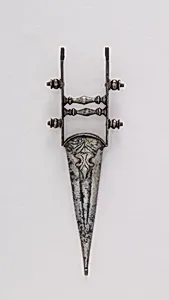
Dagger (Katar) Model
Unknown Artist
late 18th–19th century
Medium
Steel
Dimensions
H. 7 7/8 in. (20 cm); W. 2 11/16 in. (6.8 cm); Wt. 4.7 oz. (133.2 g)
Classification
Daggers
Culture
Indian
Department
Arms and Armor
Museum
Metropolitan Museum of Art, New York, NY
Credit
Bequest of George C. Stone, 1935
Accession Number
36.25.934
Rights
Public Domain
Art Historical Context
This exquisite steel model of a *katar*, a traditional Indian push dagger, dates to the late 18th or 19th century. Housed in the Metropolitan Museum of Art's and Armor Department (bequest of George C. Stone,1935), it measures just 7⅞ inches high and weighs a mere 4.7 ounces, suggesting it served as a finely crafted miniature—perhaps for display, study, or ceremonial purposes rather than combat. The *katar* exemplifies Indian martial artistry, with its distinctive H-shaped grip perpendicular to the blade, enabling powerful thrusting strikes gripped fist-first. Indian smiths of this era were masters of steel forging, often using techniques like pattern welding to create strong, flexible blades prized by warriors and nobility. Though compact, this model's precise craftsmanship highlights the fusion of functionality and aesthetic refinement in South Asian arms, reflecting a culture where weapons doubled as symbols of status and skill amid the turbulent history of Mughal decline and regional kingdoms. Visitors will appreciate its cultural depth: in India, daggers like the *katar* were not mere tools but emblems of prowess, often embellished for elite patrons. A testament to anonymous artistry, it invites us to ponder the hands that shaped steel into legacy.