
Dagger (Khanjar)
Unknown Artist
17th–18th century
Medium
Stone (probably marble), steel
Dimensions
L. 13 3/8 in. (34 cm); L. of blade 8 1/16 in. (22 cm)
Classification
Daggers
Culture
Indian
Department
Arms and Armor
Museum
Metropolitan Museum of Art, New York, NY
Credit
Purchase, Arthur Ochs Sulzberger Bequest, 2015
Accession Number
2015.694
Rights
Public Domain
Tags
Art Historical Context
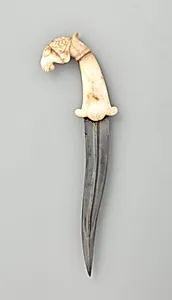
This exquisite **Dagger (Khanjar)** from17th–18th India exemplifies the masterful fusion of functionality and artistry in Mughal-era arms. Crafted with a steel blade measuring 8 1/16 inches (22 cm) and a hilt of stone—likely marble—the dagger totals 13 3/8 inches (34 cm) in length. The hilt's probable carved motif of a sheep, a tag associated with this piece, hints at symbolic decoration, possibly evoking pastoral motifs or protective emblems common in Indian decorative arts of the period. In the opulent courts of India's Deccan or Mughal regions, khanjars were more than weapons; they were status symbols worn by nobility during ceremonies or battle. The use of fine marble for the hilt elevated it beyond mere utility, showcasing lapidary techniques where stone was meticulously shaped and polished to rival jewelry. Steel blades, often watered or etched, ensured lethal sharpness while displaying metallurgical prowess. Today, this dagger graces the Metropolitan Museum of Art's Arms and Armor Department, acquired through the Arthur Ochs Sulzberger Bequest in 2015. It invites us to appreciate how Indian artisans transformed tools of war into sculptural treasures, blending cultural symbolism with technical brilliance. (198 words)