
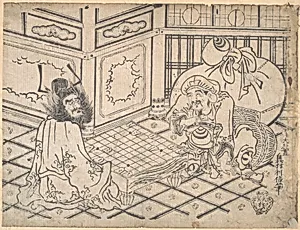
Daikoku and Shoki Playing Chess
ca. 1730
Medium
Monochrome woodblock print; ink and color on paper
Dimensions
9 x 12 in. (22.9 x 30.5 cm)
Classification
Prints
Culture & Period
Japan · Edo period (1615–1868)
Department
Asian Art
Museum
Metropolitan Museum of Art, New York, NY
Credit
Gift of Estate of Samuel Isham, 1914
Accession Number
JP817
Rights
Public Domain
Tags
Art Historical Context
Behold *Daikoku and Shoki Playing Chess*, a monochrome woodblock print by Okumura Toshin, created around 1730 during Japan's vibrant Edo period (1615–1868). Toshinobu, a skilled ukiyo-e artist, captured the "floating world" of everyday pleasures and folklore through accessible prints like this one, which measures a compact 9 x 12 inches. Produced using ink and subtle color on paper, the work exemplifies the precision of woodblock techniques, where intricate carvings on wooden blocks allowed for mass production of affordable art for urban audiences in Edo (modern Tokyo). At the heart of the print are two beloved figures from Japanese mythology: Daikoku, the jovial god of wealth and one of the Seven Lucky Gods, and Shoki, the fierce warrior demon-queller. Depicted engrossed in a game of chess—a rare nod to Western influences amid traditional pastimes like shogi—the duo blends divine authority with human whimsy. This playful scene reflects Edo-era fascination with games as social diversions and metaphors for strategy and fate, infusing folklore with humor and relatability. Housed in the Metropolitan Museum of Art's Asian Art Department, this gift from the Estate of Samuel Isham in 1914 highlights the global appreciation for ukiyo-e's cultural legacy. Toshinobu's monochromatic palette and dynamic composition invite viewers to ponder the gods' rivalry, offering a window into 18th-century Japan's blend of spirituality, leisure, and artistic innovation.
About the Artist
Okumura Toshinobu · 1690–1770
active ca. 1717–1750