
Dalmatic
Unknown Artist
late 17th or early 18th century
Medium
Silk; metal; linen
Dimensions
Neck to hem: 37 x 37 in. (94 x 94 cm)
Classification
Textiles-Ecclesiastical
Culture
Italian or French
Department
Robert Lehman Collection
Museum
Metropolitan Museum of Art, New York, NY
Credit
Robert Lehman Collection, 1975
Accession Number
1975.1.1869
Rights
Public Domain
Art Historical Context
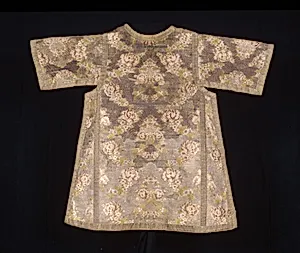
This exquisite dalmatic, a liturgical vestment from the late 17th early 18th century hails from either Italy or France and exemplifies the opulent textiles crafted for ecclesiastical use. Worn by deacons during Catholic Masses, the dalmatic is a wide-sleeved tunic measuring 37 x 37 inches from neck to hem, designed graceful movement in ritual processions. Its construction from luxurious silk, enriched with metal threads—likely gold or silver for shimmering embroidery—and lined with linen, reflects the era's masterful textile techniques, blending weaving, embroidery, and metallic appliqué to create a garment both functional and visually resplendent. Produced during the Baroque period, when church art emphasized grandeur to inspire awe and devotion, this piece highlights the cultural interplay between Italy and France, renowned for their silk industries and sumptuous religious embroidery. Such vestments were commissioned by wealthy patrons or clergy, symbolizing spiritual hierarchy and divine splendor amid the Counter-Reformation's push for sensory-rich worship. Now part of the Robert Lehman Collection at The Metropolitan Museum of Art (acquired in 1975), this anonymous masterpiece offers a tactile glimpse into 17th- and 18th-century sacred fashion, preserving the intricate handiwork of skilled artisans whose names history has overlooked. Visitors can marvel at how fabric became a canvas for faith.