
Damask
Unknown Artist
14th century
Medium
Silk
Dimensions
Overall: 7 x 6 1/2 in. (17.8 x 16.5 cm) Storage (Mat): 13 × 17 in. (33 × 43.2 cm)
Classification
Textiles-Woven
Culture
Italian
Department
Medieval Art
Museum
Metropolitan Museum of Art, New York, NY
Credit
Rogers Fund, 1917
Accession Number
17.121.6
Rights
Public Domain
Tags
Art Historical Context
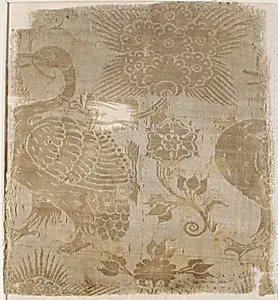
This exquisite 14th-century silk damask, originating from Italy, exemplifies the artistry of medieval woven textiles. Measuring a compact 7 x 6½ inches (17.8 x 16.5 cm), it was acquired by the Metropolitan Museum of Art through the Rogers Fund in 1917 resides in the Medieval Art department. As a product of an unknown Italian artisan, it reflects the era's thriving silk trade, influenced by Eastern techniques via trade routes like the Silk Road with Italian cities such as Lucca renowned for their weaving prowess. Damask weaving creates reversible patterns through contrasting satin and sateen weaves, allowing motifs to emerge from the interplay of light and shadow on the lustrous silk. Here, delicate birds and blooming flowers—common symbols of nature's vitality and paradise in medieval iconography—dance across the fabric, showcasing the weaver's mastery of complex looms and dyed threads. These organic designs bridged Islamic ornamental traditions with European tastes, making silk damasks prized luxury goods. In medieval society, such textiles adorned altars, vestments, and noble garments, signaling wealth and piety. This piece offers a tactile glimpse into Italy's textile heritage, highlighting how everyday materials transcended utility to become enduring art forms. Visitors can marvel at its preserved vibrancy, a testament to conservation efforts at The Met.