
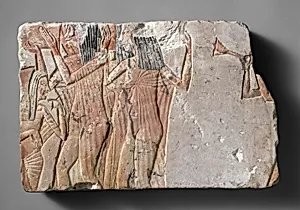
Dancers with Instruments
Unknown Artist
ca. 1353–1336 B.C.
Medium
Limestone, paint
Dimensions
H. 24 × W. 37.2 × Th. 3.5 cm (9 7/16 × 14 5/8 × 1 3/8 in.)
Classification
Talatat, dancers, musicians
Period
New Kingdom, Amarna Period
Department
Egyptian Art
Museum
Metropolitan Museum of Art, New York, NY
Credit
Gift of Norbert Schimmel, 1985
Accession Number
1985.328.11
Rights
Public Domain
Tags
Art Historical Context
Step into the vibrant world of ancient Egypt with *Dancers with Instruments*, a captivating limestone relief from the New's Amarna Period (ca. 1353–1336 B.C.), Dynasty 18. Created by an unknown artist, this small panel (H. 24 × W. 37.2 × Th. 3.5 cm) depicts graceful women musicians and dancers, their forms lively and rhythmic, evoking the joyous performances that graced royal courts and funerary rituals. The Amarna era, under Pharaoh Akhenaten, revolutionized Egyptian art with its elongated figures, natural poses, and emphasis on everyday life, breaking from rigid traditions to celebrate movement and vitality. Carved in low-relief limestone and once vividly painted—traces of which may linger—this artwork showcases masterful techniques in capturing motion and texture. The musicians clutch instruments like harps or lutes, while dancers sway in synchronized harmony, highlighting women's prominent roles in Egyptian entertainment. Such scenes were essential in tombs, ensuring eternal merriment for the deceased, and reflect the period's cultural shift toward Aten worship and expressive humanism. Now at the Metropolitan Museum of Art (Gift of Norbert Schimmel, 1985), this piece transports us to a time when music and dance bridged the mortal and divine, inviting you to imagine the echoes of ancient melodies.