
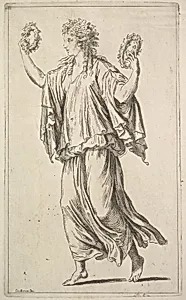
Dancing Figure
Medium
Etching
Dimensions
sheet: 16 1/8 x 21 3/4 in. (41 x 55.2 cm) plate: 13 7/8 x 8 3/8 in. (35.3 x 21.2 cm)
Classification
Prints
Department
Drawings and Prints
Museum
Metropolitan Museum of Art, New York, NY
Credit
Gift of Burton Emmett, 1929
Accession Number
29.49.53a
Rights
Public Domain
Tags
Art Historical Context
Behold the *Dancing Figure*, a captivating etching by the esteemed 17th-century Italian artist Carlo Maratti (1625–1713). Maratti, a master of the late Baroque style in Rome, was renowned for his elegant history paintings, portraits, and intricate drawings that bridged classical antiquity with contemporary grandeur. This print, created through the meticulous etching technique—where acid etches lines into a metal plate to produce rich, expressive marks—showcases a dynamic male figure in mid-motion, evoking the vitality of dance. Etchings like this one were prized in Maratti's era for their ability to disseminate artistic ideas widely, serving as reproductive prints or studies for larger compositions. The fluid lines and rhythmic pose capture the Baroque fascination with movement and emotion, possibly drawing from classical sculptures or theatrical performances popular in papal Rome. Though the exact date remains unknown, its sheet size of 16 1/8 x 21 3/4 inches makes it an intimate yet commanding work. Generously gifted to the Metropolitan Museum of Art in 1929 by Burton Emmett, this piece from the Drawings and Prints department invites visitors to ponder the artistry of motion frozen in ink. A testament to Maratti's draftsmanship, it highlights how prints preserved the Baroque spirit for generations.
About the Artist
Carlo Maratti · 1625–1713
Son of a Dalmatian father. Known as the last major Italian artist of the classical tradition, which had originated with Raphael. He created a grandiose and decorative style that was valued by his ecclesiastical patrons. Comment on works: History; Religious.