
Daruma
18th century
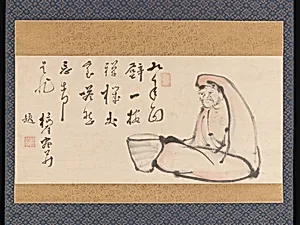
Medium
Hanging scroll; ink and color on paper
Dimensions
Image: 10 11/16 × 22 5/16 in. (27.1 × 56.7 cm) Overall with mounting: 46 1/4 × 23 15/16 in. (117.5 × 60.8 cm) Overall with knobs: 46 1/4 × 26 in. (117.5 × 66 cm)
Classification
Paintings
Culture & Period
Japan · Edo period (1615–1868)
Department
Asian Art
Museum
Metropolitan Museum of Art, New York, NY
Credit
Mary Griggs Burke Collection, Gift of the Mary and Jackson Burke Foundation, 2015
Accession Number
2015.300.174
Rights
Public Domain
Tags
Art Historical Context
**Daruma** by Totoki Baig, an 18th-century hanging scroll painted in ink and color on paper captures the iconic Zen Buddhist monk Bodhidharma—known as Daruma in Japan—with striking intensity. Created during Japan's Edo period (16151868), a time of relative peace and flourishing arts, Baigai's work reflects the literati (nanga) style, blending bold ink washes with subtle colors to evoke the monk's fierce determination and meditative power. Hanging scrolls like this were prized for display in alcoves during tea ceremonies or scholarly gatherings, transforming spaces with their portable elegance. Daruma, the legendary founder of Zen, symbolizes perseverance and enlightenment, often depicted in minimalist yet expressive portraits that challenge viewers to confront their inner selves. Baigai, a master of this genre, uses economical brushstrokes to convey the monk's wild eyebrows, piercing gaze, and robed form, highlighting the medium's versatility—ink for dynamic energy, color for depth. Housed in the Metropolitan Museum of Art's Asian Art collection, this piece from the Mary Griggs Burke Collection offers a window into Edo Japan's fusion of spiritual devotion and artistic innovation, inviting modern visitors to ponder its timeless wisdom.
About the Artist
Totoki Baigai · 1749–1804
Japanese, 1749–1804