
De opstanding uit het graf
c. 1600 - c. 1625
Medium
gild
Dimensions
10.5; 14.3
Rights
Public Domain
About this artwork
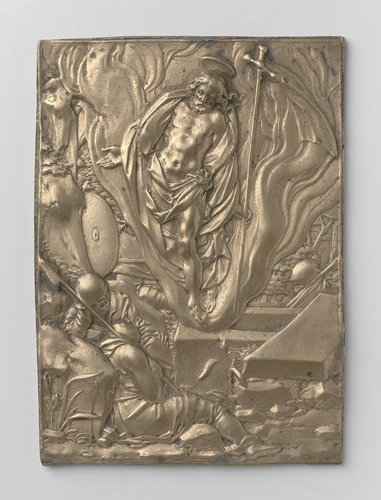
Rechthoekige, verguld bronzen plaquette met de opstanding uit het graf.
Art Historical Context
**De opstanding uit het grafThe Resurrection from the Tomb)** *Arent van Bolten c. 1600–1625, gilded bronze plaquette, 14.3 × 10.5 cm* This intimate rectangular plaquette by Dutch artist Arent van Bol captures the dramatic biblical moment of Christ's Resurrection, a cornerstone of Christian iconography symbolizing triumph over death. Crafted during the early Dutch Golden Age, around 1600–1625, it the Northern Netherlands' transition from Mannerism to Baroque influences, where religious themes persisted amid the Protestant Reformation. Van Bolten, a skilled metalworker, likely produced such small-scale devotional objects for private Catholic patrons in a predominantly Reformed society, evoking personal faith in turbulent times. The medium—gilded bronze—adds profound significance. Bronze provided durability for fine relief carving, while gilding, a technique of applying a thin gold layer via mercury amalgamation or fire-gilding, created a radiant glow mimicking divine light. At just 14.3 cm high, this pocket-sized piece might have adorned a prayer book, rosary, or cabinet, blending artistry with everyday spirituality. Its compact elegance highlights the era's mastery of miniature sculpture, making sacred narratives accessible and luxurious for collectors. Visitors will appreciate how this gleaming relic bridges art and devotion, offering a tangible glimpse into 17th-century piety and craftsmanship. (198 words)
About the Artist
Arent van Bolten · 1573–1633
Netherlandish, Zwolle 1573–before 1633 Leeuwarden