
De weduwe
Alfred Stevens, 1850 - 1906
About this artwork
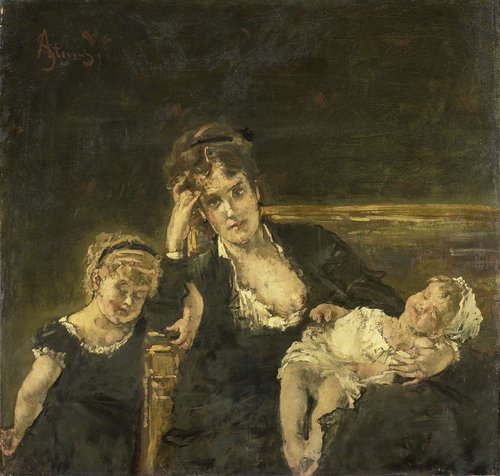
Alfred Stevens' *De weduwe* (*The Widow*), an oil on canvas measuring 79.2 × 83.7 cm, captures the quiet elegance of 19th-century mourning. Housed in theksmuseum, this intimate work bears the artist's signature "AStevens" in upper left, a hallmark of his meticulous attention to detail. Stevens (1823–1906), a Belgian painter who thrived in Paris, was for his Realist depictions of modern women in fashionable interiors, blending precise observation with subtle emotional depth. Painted during the height of Victorian-era mourning customs, the canvas likely portrays a woman in black attire, evoking the era's strict societal rituals around grief—elaborate widow's weeds symbolizing loss and propriety. Stevens' masterful use of oil allowed him to render luxurious fabrics and soft lighting with velvety textures, creating a poignant psychological portrait rather than mere sentimentality. His style bridged Realism and emerging Impressionist influences, focusing on everyday elegance amid personal sorrow. This piece reflects broader cultural shifts in 19th-century Europe, where portraiture elevated private emotions to public art. Visitors will appreciate its scale—perfect for contemplation—inviting reflection on resilience and the artistry of quietude.