
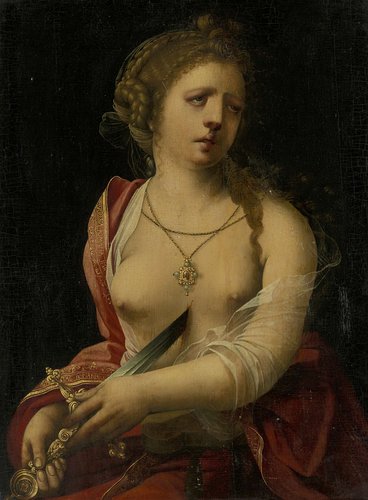
De zelfmoord van Lucretia
1500 - 1525
Medium
oil on panel
Dimensions
33.2; 4.5; 2; 41.8
Rights
Public Domain
About this artwork
Schenking van R. van Marle, Perugia
Art Historical Context
Behold the poignant *De zelfmoord van Luia* (The Suicide of Lucret), a masterful oil on panel from the early 16th century, attributed to the enigmatic Meester met de Papega (Master with the Par), an anonymous artist active in the Northern Netherlands around 1500–1525. a intimate 41.8 × 33.2 cm, this work captures a timeless tale from Roman antiquity: Lucretia, the wife who took her own life after enduring assault, symbolizing chastity and moral integrity. Her story, drawn from Livy's histories, inspired countless Renaissance artists as a rallying cry against tyranny. In the Early Netherlandish tradition, the Master with the Parrot excelled in detailed oil techniques, layering glazes on panel to achieve luminous depth and realism—hallmarks of the era's innovative medium that allowed for intricate textures and emotional subtlety. This small-scale format suggests it was likely a private devotional or cabinet piece, cherished in a collector's study. Now gracing the Rijksmuseum thanks to a generous gift from R. van Marle in Perugia, the painting offers a window into 16th-century moral storytelling and the anonymous genius of Netherlandish workshops, where biblical and classical themes intertwined to provoke reflection on virtue and tragedy.