
Dead Christ Mourned Over by Angels
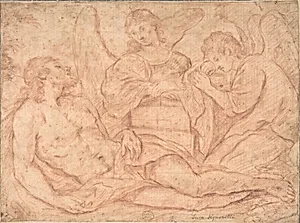
Medium
Red chalk on light tan paper
Dimensions
7-13/16 x 10-5/8 in. (19.9 x 27 cm)
Classification
Drawings
Department
Drawings and Prints
Museum
Metropolitan Museum of Art, New York, NY
Credit
Gift of Cephas G. Thompson, 1887
Accession Number
87.12.114
Rights
Public Domain
Tags
About this artwork
"Dead Christ Mourned Over by Angels" by Anonymous, Italian, Roman-Bolognese, 17th century, created in 17th century, is executed in red chalk on light tan paper. This drawings belongs to the Metropolitan Museum's Drawings and Prints collection. The work measures 7-13/16 x 10-5/8 in. (19.9 x 27 cm). The artwork entered the museum's collection through gift of cephas g. thompson, 1887.
Art Historical Context
In the hushed intimacy of the 17th-century Italian drawing *Dead Christ Mourned Over by Angels*, an anonymous artist from the Roman-Bolognese school captures a poignant moment of divine sorrow. Executed in red chalk on light tan paper, this modest sheet—measuring just 7-13/16 x 10-5/8 inches—depicts the lifeless body of Christ tenderly enveloped by grieving angels, evoking the profound emotion of the Pietà tradition. Red chalk, prized in Baroque Italy for its warm, fleshy tones and subtle blending, allowed artists to model forms with lifelike tenderness, making this work a likely preparatory study or devotional piece. This artwork emerges from the vibrant artistic crossroads of Rome and Bologna during the Counter-Reformation era, when religious imagery surged to inspire faith amid spiritual fervor. The Roman-Bolognese style, influenced by masters like the Carracci brothers, emphasized dramatic chiaroscuro and expressive figures to stir the viewer's piety. Though anonymous, the draftsmanship reflects the period's mastery of human anatomy and celestial grace, blending earthly pathos with heavenly lament. A cherished gift to the Metropolitan Museum of Art from Cephas G. Thompson in 1887, this drawing invites us into the quiet reverence of 17th-century workshops, where sketches like this bridged the divine and the human touch.