
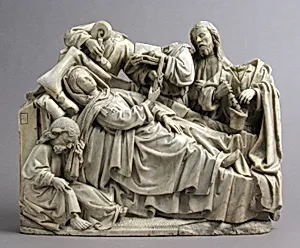
Death of the Virgin
Unknown Artist
ca. 1450–1500
Medium
Alabaster
Dimensions
12 15/16 × 16 × 4 9/16 in., 33 lb. (32.9 × 40.6 × 11.6 cm, 15 kg)
Classification
Sculpture-Stone|Sculpture-Alabaster
Culture
North French
Department
Medieval Art
Museum
Metropolitan Museum of Art, New York, NY
Credit
Gift of J. Pierpont Morgan, 1917
Accession Number
17.190.733
Rights
Public Domain
Tags
Art Historical Context
This exquisite alabaster sculpture, *Death of the Virgin*, by an unknown North French artist around 1450–1500, captures a poignant moment from medieval Christian devotion: the Virgin Mary on her deathbed, surrounded the Apostles in mourning. Measuring about 13 × 16 × 5 inches and weighing 33 pounds, its compact form suggests it was likely part of a larger altarpiece or private devotional ensemble, inviting intimate contemplation. Alabaster, a soft gypsum stone prized in Northern Europe during the late Gothic, allowed sculptors to achieve delicate details—like the Apostles' expressive gestures and flowing drapery—while enabling surface gilding or polychromy, now faded. North French workshops excelled in such relief carvings, blending realism with spiritual intensity to evoke empathy for Mary's *dormitio* (holy slumber), a theme emphasizing her purity and Assumption into heaven. Housed in the Metropolitan Museum of Art's Medieval Art department since J. Pierpont Morgan's 1917 gift, this work reflects the era's fervent Marian piety amid the Hundred Years' War's turmoil, offering solace through art's quiet power. Visitors will appreciate its tactile elegance, a testament to anonymous medieval mastery.