
Decanter
ca. 1826–35
Medium
Blown and cut glass; clay cameo
Dimensions
H. 7 3/8 in. (18.7 cm)
Classification
Decanter
Culture
American
Department
The American Wing
Museum
Metropolitan Museum of Art, New York, NY
Credit
Purchase, The Overbrook Foundation Gift, 1995
Accession Number
1995.13
Rights
Public Domain
Tags
Art Historical Context
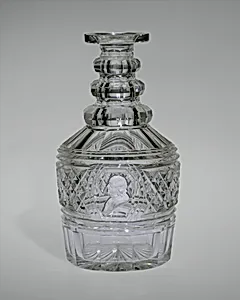
This elegant decanter, crafted by the renowned Pittsburgh glasshouse Bakewell, Page & Bakewell around 1826–35, exemplifies early American luxury glassware. Standing at 7⅜ inches tall, it was made from blown and cut glass, a labor-intensive process where molten glass is shaped by blowing, then meticulously engraved and faceted for brilliance and texture. The standout feature is its clay cameo—a raised, white clay portrait of Benjamin Franklin in profile—applied to the surface, blending glassworking with cameo-cutting traditions borrowed from classical antiquity and popular in Europe. Bakewell, Page & Bakewell were pioneers in America's burgeoning glass industry, rivaling imported English and Irish wares with their precise cutting that caught and refracted light like diamonds. Decanters like this were status symbols in affluent households, used to serve spirits with sophistication. The Franklin cameo underscores cultural reverence for the Founding Father, symbolizing enlightenment, invention, and national pride during the young republic's era of self-made success. Today, housed in The Metropolitan Museum of Art's American Wing, this piece highlights the technical virtuosity and patriotic spirit of 19th-century American craftsmanship, inviting us to toast to innovation—both Franklin's and the glassmakers'.