
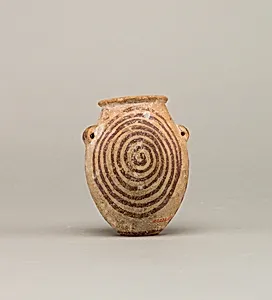
Decorated ware jar depicting spirals
Unknown Artist
ca. 3850–2960 B.C.
Medium
Pottery, paint
Classification
Jar, Decorated ware
Period
Predynastic Period
Department
Egyptian Art
Museum
Metropolitan Museum of Art, New York, NY
Credit
Rogers Fund, 1907
Accession Number
07.228.137
Rights
Public Domain
Art Historical Context
This elegant decorated ware jar, dating to approximately 3850–2960 B.C., hails from Egypt's Predynastic Period formative era before the unification of Upper and Lower Egypt 3100 B.C. Crafted from pottery and adorned with paint, it exemplifies the early mastery of ceramic techniques by anonymous artisans. Hand-formed and fired, these vessels were essential for storing grain, water, or oils in daily life, while their bold decorations elevated them to objects of beauty and ritual significance. The jar's striking spiral motifs, painted in vibrant hues, are hallmarks of Predynastic "decorated ware," likely produced in Upper Egypt's Naqada region. Spirals may evoke flowing water, cosmic cycles, or fertility—symbols that foreshadow the symbolic complexity of later Egyptian art. This style reflects a burgeoning aesthetic sophistication, blending functionality with abstract design in a time of cultural innovation, including the shift from nomadic to settled communities. Acquired through the Rogers Fund in 1907 and now housed in the Metropolitan Museum of Art's Egyptian Art Department, this jar offers a window into prehistoric Egypt's creativity. It reminds us how everyday objects preserved ancient visions, bridging the gap to the iconic art of the pharaohs.