
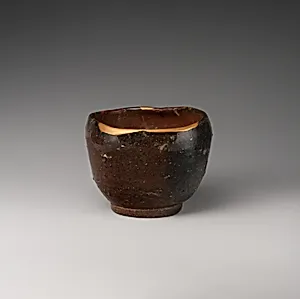
Deep Bowl
Unknown Artist
18th century
Medium
Pottery (Shigaraki ware)
Dimensions
H. 3 1/4 x 4 3/4 x 4 1/4 in. (8.3 x 12.1 x 10.8 cm)
Classification
Ceramics
Culture & Period
Japan · Edo period (1615–1868)
Department
Asian Art
Museum
Metropolitan Museum of Art, New York, NY
Credit
Edward C. Moore Collection, Bequest of Edward C. Moore, 1891
Accession Number
91.1.240
Rights
Public Domain
Art Historical Context
This deep bowl, crafted in the 18th century during Japan's Edo period (1615–1868), exemplifies the charm of Shigaraki ware, one of the nation's Six Ancient Kilns. Produced in the Shigaraki region near Kyoto, this pottery tradition dates back over a millennium and is renowned for its unglazed stoneware, fired in wood-burning kilns that create natural ash glazes and earthy textures. Measuring just 3¼ inches high and nearly 4¾ inches wide, the bowl's compact, sturdy form suggests everyday use—perhaps for serving tea, rice, or soups in a merchant's home or tea house. Shigaraki ware embodies the wabi-sabi aesthetic central to Edo-era culture, celebrating imperfection, simplicity, and harmony with nature amid Japan's peaceful isolation under the Tokugawa shogunate. The period saw a boom in domestic pottery for the rising middle class and tea ceremony enthusiasts, who prized these vessels for their organic, unrefined beauty over ornate porcelain. Subtle color variations from iron-rich clay and kiln effects highlight the artisan's mastery of fire's unpredictability. Part of the Metropolitan Museum of Art's Edward C. Moore Collection (bequest, 1891), this anonymous work invites us to appreciate the quiet artistry of functional objects, bridging utility and profound cultural poetry.