
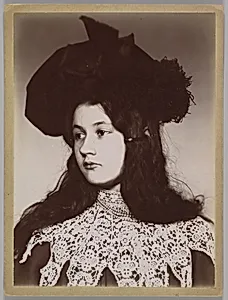
Denise Zola
ca. 1900
Medium
Gelatin silver print
Dimensions
Image: 8 7/8 × 6 9/16 in. (22.5 × 16.6 cm) Mount: 9 7/16 × 7 1/16 in. (24 × 18 cm)
Classification
Photographs
Department
Photographs
Museum
Metropolitan Museum of Art, New York, NY
Credit
Gilman Collection, Purchase, The Horace W. Goldsmith Foundation Gift, through Joyce and Robert Menschel, 2005
Accession Number
2005.100.1167
Rights
Public Domain
Tags
Art Historical Context
In the intimate portrait *Denise Zola*, around 1900 by the renowned novelist Émile Zola, we encounter a tender glimpse into private life captured through the lens of an amateur photographer. Zola, best known for his Naturalist novels like *Germinal* and his passionate defense of justice in the Dreyfus Affair, pursued photography as a passionate hobby in the late 19th century. This gelatin silver print, measuring about 8 7/8 × 6 9/16 inches, depicts a young girl—likely a family member—gazing directly at the viewer, her expression evoking quiet innocence amid the era's shifting social norms. The gelatin silver process, perfected in the 1880s, revolutionized photography with its superior detail, rich tonal range, and ability to produce sharp prints from flexible film negatives. Zola's adoption of this medium reflects the democratization of photography, moving it from elite studios to personal expression. As part of the Metropolitan Museum of Art's Gilman Collection, this work highlights early 20th-century portraiture's focus on everyday subjects, particularly girls, blending documentary realism with emotional depth. This piece offers cultural insight into fin-de-siècle France, where literary giants like Zola explored visual arts amid rapid technological change. Its preservation underscores photography's role in preserving fleeting family moments, inviting us to ponder the man behind the masterpieces.