
Densho (殿鐘)
Unknown Artist
ca. 1856
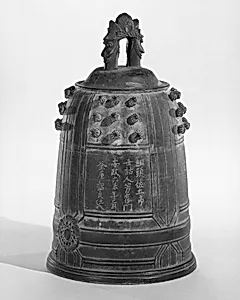
Medium
Leaded Bronze (trace of antimony)
Dimensions
H. 14 1/4 × Diam. 8 1/2 in. (36.2 × 21.6 cm)
Classification
Idiophone-Struck-bell-without clapper
Culture & Period
Japanese · Edo
Department
Musical Instruments
Museum
Metropolitan Museum of Art, New York, NY
Credit
The Crosby Brown Collection of Musical Instruments, 1889
Accession Number
89.4.1619
Rights
Public Domain
Art Historical Context
Behold the *Densho (殿鐘)*, a example of late Edo-period Japanese craftsmanship from around 1856. This leaded bronze bell, standing 14¼ inches tall with an 8½-inch diameter, belongs to the idiophone family—specifically a struck bell without an internal clapper. Visitors to the Metropolitan Museum of Art Musical Instruments department can appreciate it as part of The Crosby Brown Collection, acquired 1889, which preserves rare sonic artifacts from around the world. In Japanese Buddhist temple culture, the *densho* served a vital ritual role, rung by hand with a mallet to mark time, signal ceremonies, or invoke spiritual resonance. Crafted during the Edo era (1603–1868), a time of relative peace and refined artistry under the Tokugawa shogunate, this bell reflects the era's mastery of bronze casting. The addition of lead facilitated fluid pouring into molds, while traces of antimony enhanced durability and tone, producing a deep, resonant sound that echoed through temple halls. Though the artist remains unknown, the *densho*'s elegant form and material precision highlight Japan's enduring fusion of function, spirituality, and metallurgy—inviting us to imagine its pealing voice in sacred Edo rituals.