
Der Schatzbehalter oder Schrein der waren reichtümer des heils unnd ewyger seligkeit
Medium
Woodcuts
Dimensions
12 15/16 x 9 1/16 x 2 3/8 in. (32.8 x 23 x 6.1 cm)
Classification
Books
Department
Drawings and Prints
Museum
Metropolitan Museum of Art, New York, NY
Credit
Rogers Fund, 1919
Accession Number
19.49.4
Rights
Public Domain
Tags
Art Historical Context
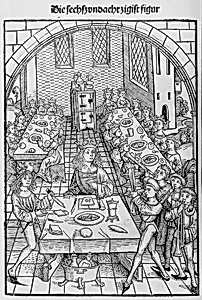
**Der Schatzbehalter oder Schre der waren reichtü des heils unnd ewyger seligkeit**1491) is a incunabulum—a book printed before 1501—produced by the Nuremberg printer Anton Koberger in collaboration with illustrators Michael Wolgemut Stephan Pater. This woodcut-illustrated volume, measuring 12 15/16 x 9 1/16 x 2 3/8 inches, served as a devotional guide, its title translating to "The Treasure Chest or Shrine of the True Riches of Salvation and Eternal Bliss." Acquired through the Rogers Fund in 1919, it now resides in The Metropolitan Museum of Art's Department of Drawings and Prints. Printed at the dawn of the printing revolution, the book exemplifies early German woodcut artistry, a technique where intricate images were carved into wooden blocks and inked for mass production. Wolgemut, a master of the Late Gothic style and teacher to Albrecht Dürer, contributed dynamic illustrations featuring musical instruments, women, parties, and tables—likely depicting allegorical scenes of spiritual feasting and communal joy amid religious themes. Koberger's press, one of Europe's largest, helped democratize such richly imaged texts, blending piety with visual storytelling. This artifact captures the cultural fervor of late 15th-century Nuremberg, where printing fused art, faith, and everyday life, offering readers a "shrine" of eternal treasures in tangible form. A window into pre-Reformation devotion, it invites us to ponder how images once illuminated souls.
About the Artist
Anton Koberger|Michael Wolgemut|Stephan Pater (German|German) · 1445 |1500 –1513 |1550
German, Nuremberg ca. 1445–1513 Nuremberg|German, first half 16th century