
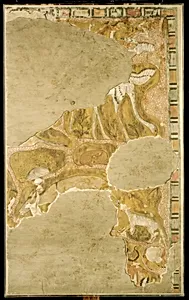
Desert Hunting Scene
A.D. 1914–1916; original ca. 1427–1400 B.C.
Medium
Tempera on paper
Dimensions
H. 126.5 cm (49 13/16 in); w. 79 cm (31 1/8 in) scale 1:1 framed: h. 131.8 cm (51 7/8 in); w. 81.3 cm (32 in)
Classification
Facsimile, Qenamun (TT 93), hunting
Period
Twentieth Century; original New Kingdom
Department
Egyptian Art
Museum
Metropolitan Museum of Art, New York, NY
Credit
Rogers Fund, 1930
Accession Number
30.4.58
Rights
Public Domain
Tags
Art Historical Context
Behold the dynamic *Desert Hunting Scene*, twentieth-century facsimile by British artist Hugh R. Hop, faithfully recreating an ancient Egyptian wall painting from the New Kingdom's Dynasty 18 (ca. 1427–1400 B.C.). This vivid composition captures noble hunters in pursuit of birds and animals amid a stark desert landscape, a common motif in Egyptian tomb art symbolizing prowess, vitality, and provisions for the afterlife. Crafted between A.D. 1914 and 1916 in tempera on paper,good's large-scale reproduction—measuring nearly 50 inches tall—preserves the original's energy and detail at a 1:1 ratio. Tempera, blending pigments with an egg-based binder, yields the luminous, matte finish reminiscent of ancient Egyptian frescoes, making it an invaluable tool for study and display. Acquired by the Metropolitan Museum of Art through the Rogers Fund in 1930, this work bridges over 3,500 years, offering visitors a window into the grandeur of pharaonic life. Its placement in the Egyptian Art department highlights how such scenes celebrated the harmony between humans, nature, and eternity.