
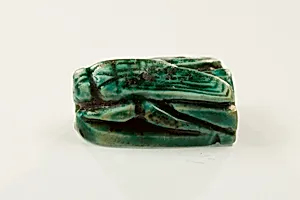
Design Amulet in the Form of a Fly
Unknown Artist
ca. 1550–1525 B.C.
Medium
Glazed steatite
Dimensions
L. 1.3 × W. 0.9 × H. 0.5 cm (1/2 × 3/8 × 3/16 in.)
Classification
Amulet, fly, Queen Ahhotep
Period
New Kingdom
Department
Egyptian Art
Museum
Metropolitan Museum of Art, New York, NY
Credit
Gift of Helen Miller Gould, 1910
Accession Number
10.130.168
Rights
Public Domain
Tags
Art Historical Context
This delicate amulet, shaped like a fly, hails from Egypt's New Kingdom, specifically the early 18th Dynasty (ca. 1550–1525 B.C.), a age of pharaonic power marked by expansive military campaigns and monumental architecture under rulers like Thutmose III. Crafted from glazed steatite—a soft soapstone coated with a vibrant glaze to mimic the luminous faience popular in Egyptian jewelry—the tiny object measures just 1.3 cm long, perfect for wearing as a pendant or placing in a tomb. Amulets like this were everyday talismans, believed to harness protective powers against misfortune or evil. The fly motif, though unusual, draws from nature's abundance in the Nile Valley, symbolizing resilience or perhaps warding off pests metaphorically. Artisans skillfully carved the steatite before glazing, achieving a glossy, durable finish that preserved intricate details on such a miniature scale. This technique highlights the Egyptians' mastery of small-scale sculpture, blending functionality with artistry. Now housed in the Metropolitan Museum of Art's Egyptian Art department, thanks to a 1910 gift from Helen Miller Gould, this piece offers a glimpse into ancient beliefs where even insects embodied deeper spiritual significance.