
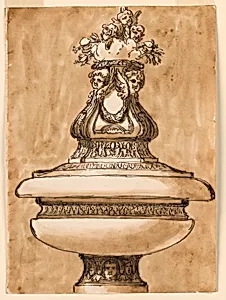
Design for a Baptismal Font
Classification
architecture
Department
Smithsonian Collection
Museum
Smithsonian American Art Museum
Credit
Museum purchase through gift of various donors and from Eleanor G. Hewitt Fund
Accession Number
1938-88-1408
Rights
Public Domain
About this artwork
Research in Progress
Art Historical Context
Giuseppe Barberi (1746–1809), a prominent Italian architect and designer active in Rome during the late 18th century, created this *Design for a Baptismal* around 1775. As a master of ornamental architecture, Barberi contributed to the Neoclassical revival, blending classical antiquity with elegant functionality. This preparatory drawing or plan exemplifies his expertise in ecclesiastical design, envisioning a sacred vessel central to Christian baptismal rites—where water symbolizes spiritual rebirth. Baptismal fonts have long held profound cultural and religious significance in Italian art and architecture, often serving as focal points in churches with intricate carvings or symbolic motifs. Barberi's work from this period reflects the era's shift toward refined Neoclassicism, favoring symmetry, proportion, and subtle grandeur over Baroque excess. Though the medium remains unidentified amid ongoing research, its architectural classification underscores its role as a blueprint for durable stone or marble craftsmanship. Housed in the Smithsonian American Art Museum through a generous museum purchase, this piece offers visitors a glimpse into 18th-century Italian design ingenuity. It invites reflection on how everyday sacred objects embodied artistic innovation, bridging faith, history, and aesthetics in the Eternal City.