
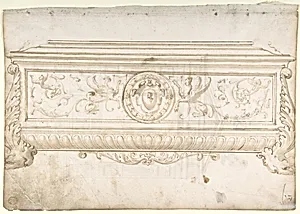
Design for a Cassone (Recto), Design for a Tomb (Verso)
ca. 1530–60
Medium
Pen and brown ink, brush and gray-brown wash (recto and verso)
Dimensions
sheet: 16 1/8 x 10 11/16 in. (41 x 27.2 cm)
Classification
Drawings|Ornament & Architecture
Department
Drawings and Prints
Museum
Metropolitan Museum of Art, New York, NY
Credit
Rogers Fund, 1966
Accession Number
66.621.3
Rights
Public Domain
Tags
Art Historical Context
This double-sided drawing from mid-16th-century Italy offers a fascinating glimpse into the working methods of Renaissance designers. Created with pen and brown ink accented by gray-brown wash, the sheet measures just over 16 inches tall and served as a practical study for two very different projects. On one side, the artist sketched an ornate cassone—a richly decorated marriage chest prized by wealthy Italian families—while the reverse features designs for a tomb, complete with profiled figures that evoke classical commemorative sculpture. Such drawings highlight the broad range of commissions handled by anonymous draftsmen during this period, when artists moved fluidly between domestic furnishings and monumental architecture. The careful layering of ink and wash allowed the creator to explore light, shadow, and three-dimensional form on a flat surface, techniques essential for communicating ideas to patrons and craftsmen. Today preserved in the Metropolitan Museum’s collection of Drawings and Prints, the work reminds us how even preparatory sketches can reveal the cultural values of Renaissance Italy, where celebrations of marriage and memorials to the dead were both expressed through elaborate ornament and architectural grandeur.