
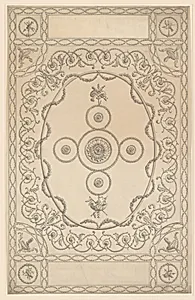
Design for a Ceiling, an Oblong with an Oval Center
1743–96
Medium
Pen and ink, brush and wash
Dimensions
sheet: 13 3/8 x 21 5/8 in. (34 x 55 cm)
Classification
Drawings|Ornament & Architecture
Department
Drawings and Prints
Museum
Metropolitan Museum of Art, New York, NY
Credit
Harris Brisbane Dick Fund, 1934
Accession Number
34.78.2(18)
Rights
Public Domain
Tags
Art Historical Context
This elegant design for a ceiling by Sir William Chambers captures the refined spirit of 18th-century neoclassicism. Created between 1743 and 1796, the presents an oblong layout with oval center, intended to guide the decoration of an interior space. Chambers, a leading architect of his time known for works like Somerset House, used such studies to blend architectural structure with ornamental detail, reflecting the period’s renewed interest in classical harmony and proportion. Executed in pen and ink with brush and wash, the medium allowed Chambers to achieve both precise linear definition and subtle tonal effects that suggest depth and light. These techniques were essential for architectural drawings, helping patrons visualize how plasterwork, painting, or gilding might appear overhead. The sheet’s modest size—roughly 13 by 22 inches—further indicates it served as a working proposal rather than a finished presentation piece. Housed in the Metropolitan Museum of Art’s Department of Drawings and Prints, this work offers visitors a glimpse into the collaborative process behind grand Georgian interiors. It highlights how architects like Chambers shaped not only buildings but also the intimate, decorative environments experienced daily by their inhabitants.
About the Artist
Sir William Chambers · 1723–1796
### Sir William Chambers (1723–1796) Born on 23 February 1723 in Gothenburg, Sweden, to parents of Scottish descent—his father a merchant—Sir William Chambers embarked on an extraordinary path that bridged continents and cultures. At just 16, after initial education in England, he joined the Swedish East India Company, undertaking three voyages to China in the 1740s. These journeys profoundly sha...