
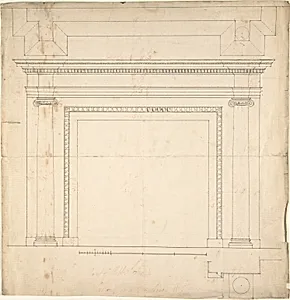
Design for a Chimneypiece
1740–1800
Medium
Pen and ink
Classification
Drawings|Ornament & Architecture
Department
Drawings and Prints
Museum
Metropolitan Museum of Art, New York, NY
Credit
The Elisha Whittelsey Collection, The Elisha Whittesley Fund, 1949
Accession Number
49.56.30
Rights
Public Domain
Tags
Art Historical Context
**Design for a Chimneiece** by Sir William Chambers (1723–1796) is a delicate pen and ink drawing from the mid-to-late 18th, showcasing the architect's mastery in ornamental design. Chambers, a pivotal figure in British neoclassicism, drew inspiration from ancient Roman and Renaissance architecture, blending symmetry and classical motifs into elegant interiors. This chimneypiece—essentially an ornate fireplace surround—exemplifies the grandeur of Georgian homes, where fireplaces served as focal points for warmth, light, and social gatherings. Rendered in precise pen and ink, the drawing highlights Chambers' technical skill, allowing for intricate detailing of moldings, pediments, and decorative elements that would translate into carved stone or wood. Such preparatory sketches were essential for communicating visions to craftsmen, bridging the gap between concept and construction. Housed in the Metropolitan Museum of Art's Drawings and Prints department as part of The Elisha Whittelsey Collection (acquired 1949), it reflects the era's fascination with architectural ornamentation amid the Enlightenment's revival of classical ideals. This piece invites us to appreciate how everyday domestic features became canvases for artistic innovation, underscoring Chambers' influence on London's refined townhouses and palaces. (198 words)
About the Artist
Sir William Chambers · 1723–1796
### Sir William Chambers (1723–1796) Born on 23 February 1723 in Gothenburg, Sweden, to parents of Scottish descent—his father a merchant—Sir William Chambers embarked on an extraordinary path that bridged continents and cultures. At just 16, after initial education in England, he joined the Swedish East India Company, undertaking three voyages to China in the 1740s. These journeys profoundly sha...