
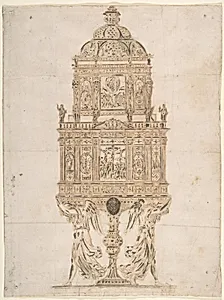
Design for a Ciborium
17th century
Medium
Pen and brown ink
Classification
Drawings
Department
Drawings and Prints
Museum
Metropolitan Museum of Art, New York, NY
Credit
The Elisha Whittelsey Collection, The Elisha Whittelsey Fund, 1968
Accession Number
68.669.1
Rights
Public Domain
Art Historical Context
This delicate pen and brown ink drawing, created by an anonymous Italian artist in the 17th, presents a refined *Design for a Cibor*—a sacred vessel used in Catholic liturgy to hold the consecrated Eucharistic hosts. Housed in the Metropolitan Museum of Art Drawings and Prints department, exemplifies the meticulous preparatory sketches favored by Baroque-era workshops, where artists visualized ornate liturgical objects amid the Counter-Reformation's push for grandeur in worship. The design likely features ethereal angels, as suggested by its tags, adorning the ciborium's form with dynamic flourishes typical of Italian Baroque style. Pen and brown ink allowed for precise line work and subtle shading, capturing intricate details like scrolling motifs and heavenly figures that would translate into silver or gilded metalwork. Such drawings were essential blueprints for goldsmiths and silversmiths, bridging artistic imagination with ecclesiastical craftsmanship. In 17th-century Italy, these liturgical designs underscored the era's fervent Catholic devotion, transforming everyday rituals into spectacles of divine beauty. Acquired through The Elisha Whittelsey Fund in 1968, this anonymous gem offers visitors a window into the collaborative artistry behind opulent church treasures, reminding us how a simple sketch could inspire objects of profound spiritual resonance.