
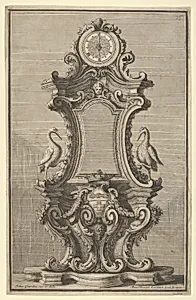
Design for a Clock, from 'Disegni Diversi'
1714 or 1750
Medium
Etching and engraving
Dimensions
Plate: 10 11/16 × 6 7/8 in. (27.1 × 17.4 cm)
Classification
Prints|Ornament & Architecture
Department
Drawings and Prints
Museum
Metropolitan Museum of Art, New York, NY
Credit
Harris Brisbane Dick Fund, 1930
Accession Number
29.58.31(54)
Rights
Public Domain
Tags
Art Historical Context
This elegant etching and engraving, titled *Design for a Clock*, comes from the series *Disegni Diversi* and showcases the inventive ornamental style of Giovanni Giardini, with engraving contributions possibly by Maximilian Joseph Limpach. Created around 1714 or 1750, the print presents a richly detailed clock design incorporating birds, a coat of arms, and mirrored surfaces, reflecting the luxurious tastes of early 18th-century European interiors. As a work in the Metropolitan Museum’s Drawings and Prints department, it exemplifies how such prints served as practical models for craftsmen working in metal, wood, and other materials. The medium of etching and engraving allowed for precise, reproducible lines that captured intricate details, making these designs widely influential across workshops. Classified under Ornament & Architecture, the piece highlights the period’s fascination with elaborate timepieces as both functional objects and symbols of status. Elements like heraldic shields and avian motifs suggest a blend of personal patronage and decorative flair typical of Baroque and Rococo aesthetics. Visitors can appreciate how this design bridges art and utility, offering a window into the collaborative world of designers and printmakers who shaped everyday luxury. Its modest plate size belies the grandeur it was meant to inspire in real-world clocks.