
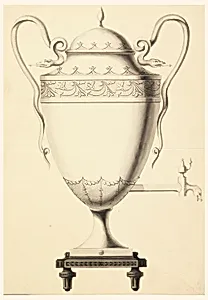
Design for a Coffee Urn
Classification
metalwork
Department
Smithsonian Collection
Museum
Smithsonian American Art Museum
Credit
Purchased for the Museum by the Advisory Council
Accession Number
1911-28-324
Rights
Public Domain
About this artwork
Research in Progress
Art Historical Context
**Design for a Coffee Urn** by Joseph Anton Seethaler offers a fascinating glimpse into early 19-century German craftsmanship. Created in 1810 when the artist was just 11 years, this design reflects the precocious talent of a young talent in the metalwork tradition. Seethaler, a German artist active until 1868, likely sketched this as a proposal for a functional yet elegant coffee urn—a popular household item symbolizing hospitality and refinement during the Napoleonic era. Classified as metalwork and now part of the Smithsonian American Art Museum's collection (purchased by the Advisory Council), the piece highlights the intersection of design and production in European decorative arts. Though the medium remains unknown amid ongoing research, such designs were typically preparatory drawings for silversmiths or coppersmiths, blending utility with ornamental flair. Coffee urns like this one embodied the growing coffee culture in Europe, where elaborate metal vessels elevated everyday rituals to displays of status. This artwork invites visitors to appreciate the roots of industrial design, showcasing how youthful ingenuity contributed to the era's sophisticated metalwork heritage. A testament to enduring curiosity, it reminds us that great ideas often begin with a single, inspired sketch.