
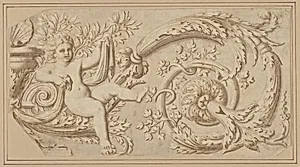
Design for a Frieze with Putto and Acanthus Scroll
17th century ?
Medium
Pen and brown ink with gray and light brown wash
Dimensions
Sheet: 8 1/4 × 12 13/16 in. (21 × 32.5 cm); various
Classification
Drawings|Ornament & Architecture
Department
Drawings and Prints
Museum
Metropolitan Museum of Art, New York, NY
Credit
Edward Pearce Casey Fund, 2014
Accession Number
2014.478
Rights
Public Domain
Art Historical Context
This delicate 17th-century French, titled *Design for a Frieze Putto and Acanthus*, captures the exuberant ornamental style of the Baroque era. anonymously—likely by an architect or decorator in a bustling workshop—it sketches a decorative frieze band featuring a playful putto (a chubby, winged child figure symbolizing innocence and joy) intertwined with flowing acanthus scrolls. These, inspired by ancient Roman and Renaissance designs, were staples in grand interiors, evoking classical grandeur amid France's opulent Louis XIV period. Executed in pen and brown ink with subtle gray and light brown washes on a modest sheet (8¼ × 12⅞ in.), the work showcases masterful techniques for preparatory sketches. Fine ink lines define intricate curls and contours, while washes add depth and shadow, helping visualize how the frieze might appear carved in stone or stucco on a palace wall or church. Such drawings were essential blueprints for artisans, bridging imagination and craftsmanship. Acquired by The Metropolitan Museum of Art in 2014 through the Edward Pearce Casey Fund, this piece offers a window into the collaborative world of 17th-century design, where ornament elevated architecture to art. Visitors can appreciate its timeless elegance, a testament to France's enduring love for lavish decoration.